Nathan Silvernail: Can Grass Replace Timber Panels?
Former SpaceX engineer Nathan Silvernail founded Plantd to make structural building panels from fast-growing perennial grass, an alternative to timber-based engineered wood such as OSB.
The clean-tech future still has to be dug out of the ground.
Episodes about energy, emissions, mining, housing, biomass, data centers, and the material cost of digital systems.
Former SpaceX engineer Nathan Silvernail founded Plantd to make structural building panels from fast-growing perennial grass, an alternative to timber-based engineered wood such as OSB.
NeuReality CEO Moshe Tanach builds the networking hardware that sits between AI chips, on the argument that the industry keeps answering its inference problem by buying more GPUs rather than using the ones it already has.
Good Food Institute founder Bruce Friedrich has spent a decade on a bet that the way to end factory farming isn't persuasion. It's making cultivated and plant-based meat good enough and cheap enough that nobody has to be talked into anything.
AstroForge CEO Matt Gialich wants to mine platinum from metal asteroids, which he describes as the cores of planets. On Earth, he says, most of that platinum sits in the core, out of reach.
Sanjay Vijendran has left the European Space Agency and co-founded TerraSpark, which has raised 5.4 million euros in pre-seed funding to build space-based solar power.
Jennifer Dunn, a professor of chemical engineering at Northwestern University, measures the environmental impact of getting lithium and copper out of the ground, and says much of it still isn't documented.
Shapol and his co-founder used to lead a reusable rocket programme. Now their company, Entangl, builds deterministic design software for the systems that keep AI data centres running.
How did China come to hold the electric future? The essay we read traces the electric stack from the 1973 oil shock to China's dominance of rare earths and the magnets made from them.
Danny Andreev founded Sunburn Schematics to design radiation-hardened electronics for space and defence, starting with isolated DC to DC converters, which he calls the beating heart of a spacecraft.
Conductor Quantum founder Brandon Severin wants to turn the transistors the chip industry already makes by the billion into spin qubits, and uses AI to tune them.
Glen Martin, CEO of the Extraterrestrial Mining Company, wants to mine helium-3 on the Moon, where the surface keeps absorbing it from the Sun.
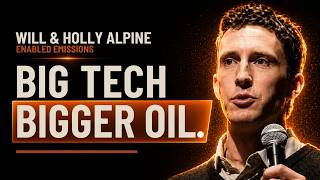
Holly and Will Alpine spent 14 combined years at Microsoft before founding Enabled Emissions, to raise awareness of how AI is being used to make oil and gas extraction more efficient.
Martin Soltau directed the UK government study into space-based solar power, and the latest economic work at Space Solar puts its energy below 30 dollars a megawatt hour at today's launch costs.
Sanjay Vijendran led the European Space Agency's first dedicated research programme on space-based solar power, and is now director of his own venture, Space Energy Insights.
How do people compete when AI commoditises their work? Packy McCormick's answer in Most Human Wins is to run up the stack, not just move up it.