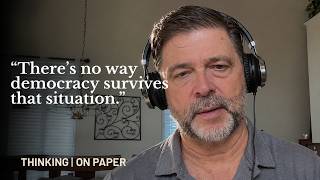
How Does Radiation Affect Electronics in Space?
Danny Andreev ran his first radiation test campaign with roughly three weeks to prepare, and three of the chips would not break. So no matter how much radiation we poured in, the beam energy that we used, they happened to be extremely resilient.



In this episode · 18 chapters
- Isolated DC to DC conversion
- Why it is hard to service in space
- Degradation, and single event upsets
- The main obstacles
- Thermal cycling
- Brookhaven
- The success rate
- The ones we could not break
- Old bipolar junction transistors
- Would the guitar work?
- Who else should we send
- Metzger's bootstrapping paper
- Toyota Hilux on the moon
- Trade-offs in space
- What Danny finds most exciting
- Kiteboarding
- What do you say to the trolls?
- The Kevin Kelly question
Curiosity has led me to learn all the things that I need in order to pull things off. I think what powers me more is faith in the righteousness of life.
Danny Andreev, founder of Sunburn Schematics, designs radiation hardened electronics for space and defence. He explains isolated DC to DC conversion, which he calls the beating heart of a spacecraft, and why thermal cycling is arguably bigger than anything else.
He describes how LEDs degrade rapidly in space, why old bipolar junction transistor chips held up better than newer CMOS in his tests, and why he wants the first lunar rovers to be Toyota Hiluxes. He also talks about kiteboarding.
Danny Andreev, founder of Sunburn Schematics, designs radiation-hardened power electronics for space and defence, including radiation-tolerant DC to DC converters. On the Thinking On Paper podcast, he explains how radiation breaks commercial chips and argues that the space industry will only scale if this hardware costs about the same as its equivalent on Earth.
How does radiation damage electronics in space?
Radiation damages electronics when a high-energy particle hits a sensitive part of a chip and flips a stored one to a zero, a fault known as a single event upset. In a data system that is an error you can correct, Andreev says, but in a power system a switch at the wrong moment can send a surge of current and voltage through a device and physically break it.
What is DC to DC conversion in a spacecraft?
DC to DC conversion, stepping one direct current voltage to another so each part of a system gets the power it needs, is what Andreev calls “the beating heart of a spacecraft”. He compares it to a laptop charger brick, and says plugging a 600 volt level three car charger straight into a phone would detonate it.
What role will Sunburn Schematics play in a new space station?
Sunburn Schematics is part of a proposal for a new space station, where the prime contractor wants its converters between the station's blocks, Andreev says. Those converters need galvanic isolation, which he defines as “transmission of electrical power without two conductors touching”.
How did commercial chips fare in Danny Andreev's radiation tests?
At Brookhaven National Lab, a Department of Energy site where NASA also tests, Andreev irradiated commercial automotive-grade gallium nitride transistors bought from Digi-Key, because no switching transistors rated for 650 volts had been radiation tested. He says two of the four gallium nitride transistors worked for his conditions, and three of seven digital chips “we couldn't even get them to break”.
How are space missions changing, according to Danny Andreev?
The space industry is shifting from 10 to 15 year missions to three to five year missions, Andreev says, with cheaper craft flown in larger numbers. His rule for a failed unit: “if it breaks, you just let it burn up in atmosphere and you fly another one”, and as a rule of thumb older bipolar junction transistor chips survive radiation better than newer CMOS chips.
Where Mark and Andreev disagree
Mark and Jeremy do not directly challenge Andreev; the sharpest exchange comes when they raise Philip Metzger's paper on bootstrapping the space industry and Mark points to the importance of 3D printing. Andreev disagrees with the paper's assumptions and says lunar industry should use simple Earth machinery instead: “the first lunar rovers should really be Toyota Hiluxes.”
Links from this episode
Questions
How does radiation affect electronics in space?
Radiation damages electronics when a high-energy particle hits a sensitive part of a chip and flips a stored one to a zero, a fault known as a single event upset. In a data system that is an error you can correct, Andreev says, but in a power system a switch at the wrong moment can send a surge of current and voltage through a device and physically break it.
Who is Danny Andreev?
Danny Andreev, founder of Sunburn Schematics, designs radiation hardened electronics for space and defence.
What does Sunburn Schematics make?
Danny Andreev, founder of Sunburn Schematics, designs radiation-hardened power electronics for space and defence, including radiation-tolerant DC to DC converters.
What does the space industry need to scale, says Danny Andreev?
On the Thinking On Paper podcast, he explains how radiation breaks commercial chips and argues that the space industry will only scale if this hardware costs about the same as its equivalent on Earth.
Transcript
Mark Fielding our guest is Danny the founder of Sunburn Schematics, and he's designing radiation hardened electronics for space and defence. Welcome to the show, Danny. Thank you for thinking on paper with us.
Danny Andreev Yeah, thanks, y'all. Thanks for having me. Really appreciate it and excited to talk a little bit about power and space.
Jeremy Gilbertson The dot that led us to you was Philip at Star Cloud. engineering these big things called data centers, right? But these big things need very important small things. So tell us about what you're into.
and how these things fit into the bigger picture of what some of these other companies are doing.
Isolated DC to DC conversion
Danny Andreev I'm into isolated DC to DC conversion, specifically the type that's radiation tolerant and works in the vacuum of space. It's a core building block for any system going into space. And I think of it as sort of the beating heart of a spacecraft, satellite, rocket, lunar rover, anything. Whenever you're thinking about converting one electrical power to another, right, here on earth, you use like a laptop brick to connect to the between your laptop and the wall in space, you need to use something similar. And even in a computer system, you have sub modules that are converting what your laptop charger is bringing in to what your CPU or GPU is using. Similarly, you have various conversion blocks scattered around your aircraft, your satellite, your rocket. And that's what we do. That's what we focus on, power conversion in space.
Jeremy Gilbertson is being converted DC to DC just like on a very big level just for us newbies.
Danny Andreev if you're not super acquainted with the electrical engineering, like imagine you can't plug in your DC car charger, your Tesla charger directly into your cell phone, right? The voltage on your DC charger is not compatible with the voltage on your phone. You, if you try to plug it in and it would actually turn on, you would detonate your phone with 600 volts if you had like a level three charger.
Not compatible. So you need some sort of block that sits in between and in ⁓ a smart way, without diving into the technical details, it switches the 600 volts or whatever you're putting in down to, let's say, five volts, which is likely what your phone uses.
Mark Fielding on the International Space Station, for example, your converters, would they be working on the actual infrastructure of the space station itself? Or would it be for the devices that the astronauts are using inside the space station? Would it be both of those? What are they being used to do?
Danny Andreev not on an international space station, but what's funny is we are building a proposal for a new space station right now and where the prime contractor is looking to use us and our expertise is on converting bus voltages in between different blocks of the space station. And so if you think about various conversion steps. You have solar panels, the space station I think has a 200 kilowatt array. It down converts whatever the voltage, the fluctuating voltage on those solar panels, down to a stable, I think it's 100 volts or 120 volts DC. And then between the different parts of the station inside the walls, you have converters where you like, you stitch two blocks of the space station together, you've got electrical cables connecting. Not only do you need to change the voltage, but
In this case, you want to isolate it. And what that means, galvanic isolation is basically transmission of electrical power without two conductors touching. So how do I put this? If I have like a wall outlet, you know, and I'm standing barefoot on the ground and I put my finger in the outlet, I get zapped, right? If I have an isolator in between that's isolating me from ground,
Instead, I put my finger into it and my charge potential relative to the other plug increases, but I don't get zapped.
Jeremy Gilbertson what's the process of going, okay, I need to think four issues down the line and how people can fix and make sure that system comes back up and running when it's so far away from hardware stores and things like that.
Why it is hard to service in space
Danny Andreev In terms of fixing stuff in space, it really is hard to service things. And so we do our best to build modules that are just not going to break for the service life that they're expected to function at.
And typically what I'll cause, because it takes exponentially more money to get every nine sigma, yeah, to ensure non-breakage. What people do is they'll, architecturally, they'll parallelize multiple modules, for example. If you understand what your fault conditions are, for example, if you, when you break, you break closed or you break open, right? You can mitigate that.
in an architectural way and you can have redundant systems that yeah, over the service life of your craft, maybe one of them will break. And then the backups will take over. But largely the way I think about it is if it breaks, you just let it burn up in atmosphere and you fly another one, right? We're sort of as an industry, we're shifting over from like 10, 15 year missions to...
three to five year missions and instead of one to you know 300 million dollar spacecrafts over to you know million dollar craft and hundreds if not thousands of them right obviously SpaceX is the only one who really has thousands but I think there's soon going to be other buses and satellites you know constellations that are well into the hundreds if not thousands
Mark Fielding Let's say for the sake of stupidity that
The next iteration of the space station is built using commercial grade electronics. What fails, how does it fail? Why does it fail?
Danny Andreev I think a realistic scenario, the space station would never use like strictly commercial grade untested electronics, it may be in a, yeah, yeah. But there are many spacecraft, right? There's microsats and there's even sometimes serious satellite buses that do use space electronics because the companies are just betting that they'll last long enough. But that long enough ends usually due to two things, high energy particles hitting a sensitive part of the semiconductor lattice.
Mark Fielding I know, it was like a silly thought experiment.
Degradation, and single event upsets
Danny Andreev and breaking down certain operations. The other one is degradation over time. for example, LEDs and lighting semiconductors are notorious for this. They degrade very rapidly in space. The junctions that create light are very thin and small amounts of particles will wear them away very quickly. And so things like optocouplers typically cannot be used for long duration missions in space.
But typically, the issue is you've got high energy particles that are coming from the sun, they're coming from the galaxy, they're coming from just the wider cosmos, and they're just flying around the universe and near our Earth. Our Earth captures them magnetically, and so there's orbital bands where you have high concentrations of these.
these particles. And if you've ever been in the north and seen the northern lights, that is those high-energy charged particles being stuck in the Earth's magnetic field and then channeled towards the north and south poles.
When your satellite is flying in those bands of high-energy particles, you expect a certain number of those particles to hit every square centimeter of your device. If you say, let's say you have a device, a semiconductor device, like a switch, like a one-and-zero latch, it can work in one of two ways. It can be constantly pulling currents, kind of a bipolar junction transistor type device, which is more immune, or you could have one which is like a little capacitor and it's building up charge in order to represent the one and the zero. And what happens is if you have a high enough energy particle, it can hit and it can actually deposit charges on a plate. And so it can switch from a one to a zero. And this can have one of two effects. In a more digital system, right, this could be a simple just error in data, right?
instead of being in state A, you're now in state B, even though you didn't mean to be in state B, you didn't mean to make that transition. And so you can mitigate that through triplicating logic, you can mitigate that through, you know, powering on and off and kind of storing memory multiple times. There's various state machines that are error correcting and you can have little daemons and code that go around and scrub data and restore, you know, your ones and zeros.
in a system that is more, it's called linked to the power of either an individual semiconductor or a larger system, when you change a one to a zero, well that could have catastrophic effects because that one or zero can actually represent a switch in a large amount of voltage or current. For example, if your charged particle lands on the logical element of a gate driver, that which manipulates a a gate that switches large amounts of voltage and current, well, if it switches at the wrong time, you could have a ton of current and a ton of voltage just shoot through a particular device and actually physically break it, melts parts of it, crack, solder joints just generally make parts of your system completely destroyed. then you have that part of your system is no longer working.
The main obstacles
Mark Fielding what are main obstacles to the converter systems? radiation, vibration and extreme temperature? Is there anything else to fit into that matrix?
what are you building to protect it from?
Thermal cycling
Danny Andreev thermal cycling is big, arguably bigger than anything else. Just as you switch on and off your device, as you fly the dark side, know, behind the Earth's shadow, you can experience much colder conditions. Typically, spacecraft have battery systems, and so we don't end up having to design for that entire temperature swing, but it can be an issue if there's not enough thermal mass or if you're not heating or if you're, you know, you're doing some missions that are beyond kind of low Earth orbit.
Vibration is not a huge issue for us because what we're really building is sub-modules, right? We're board-level modules, power converters that are getting soldered onto, you know, the PCB that has a bunch of other stuff on it. So vibration typically isn't a huge issue, especially because we're fully encapsulating in an epoxy and it's just like a black box, you know, plug it in, does its job, nobody ever has to worry about it anymore. Radiation is a big issue. So again, we just...
Brookhaven
Danny Andreev returned me and my business partner, we were at the Brookhaven National Lab, which is a large cyclotron. It's it's a about 10 kilometer diameter device, which accelerates high energy particles. And then you get to be in this sort of, yeah, it's a very small version of that. Yeah. I think this might be mistaken on this, but I wouldn't be surprised if it was built for the, um, Atomics Weapons Program back in like the sixties.
Mark Fielding Is that like the CERN in Switzerland and France? ⁓
Danny Andreev and these. A Department of Energy runs this place and NASA has their own little booth there and folks like us come in and test various semiconductors for behavior under various radiation conditions. And so that is probably the most expensive and kind of non-intuitive thing to build for. It's really hard to tell how a device is going to react during a radiation event. It's not, especially when the device you're testing has many, different like pieces to it. So again, going back to like the star cloud folks, right? They're going to be putting server infrastructure in space. And so they're taking commercial server systems most likely, and they've got to figure out kind of what are the radiation effects on that. And you don't really know when you're taking a really big system. For us, it's a little bit simpler because we get to take individual ICs, integrated circuits, and bombard them, put them into sort of ideal electrical test conditions, and to see exactly how they behave. And we can do so in a very controlled manner. ⁓ We will build a, how do you say, independent system where every chip has its perfect electrical inputs, and these electrical inputs are known good inputs.
⁓ And then we're measuring their outputs using oscilloscopes or other measurement equipment. All the equipment is away from the radiation source, so it's not getting affected. The only thing that is actually subject to radiation is the chip that's right in front of the beam. And so we can see how it's behaving. And based on its behavior, we can then make decisions. Do we use it? Do we not use it? Is it?
Is it failing outright? Does it like break and then it doesn't reset? And so it's just going to be dead on arrival if we send it to space? Or is it more like, you know, it gets into weird states and if you power cycle it, goes back to being functioning well. And we basically, we need to learn that. And then from that data, we can make engineering decisions about how we use these integrated circuits, if at all. One challenge that I recently had is we're moving kind of into the higher voltage systems and
And there hasn't been any switching transistors that are rated for 650 volts that are tested for radiation. And so we ended up taking a bunch of parts off of Digi-Key, commercially available automotive kind of grade gallium nitride transistors, putting them on a big kind of matrix, ⁓ a PCB with, you know, four by four of them.
bunch of inputs and outputs, putting them in front of this beam and doing a bunch of testing on it. And we had like five different of these PCBs and we'd irradiate it with one beam, see what the effects are, irradiate it with another beam, see what the effects are, change the input voltages to these transistors, see if they still break, and then figure out what their maximum kind of capability is and how likely they are to break under different conditions, both the voltage that's applied to them as well as what type of radiation particles are hitting them. And so now we have this kind of matrix and we have this understanding of what the various semiconductors do under different environments. And so from the engineering standpoint, I can be like, okay, this one's good to go or this one's not good to go. And again, my background's not really in radiation effects. I did study physics, but there are experts and one who's very well known in the industry and especially in the new space industry is Matt Gill.
And I've had the pleasure of working with him. And so he's specifically a radiation consultant. His entire career is understanding this data, understanding which devices are likely to fly or to fail at different orbits based on test data. And so we can take somebody like that, present to them the results that we got, and then get a much higher level of confidence in saying that, okay, good. Like this device passed these tests, it's good to go.
is interpreting that data does take a lot of very niche know-how that isn't widely available.
The success rate
Mark Fielding What's your success rate at Brookhaven? Is one in 10 failing or one in 10 passing the radiation test? What's the data saying?
Danny Andreev I had a very surprisingly good test run. This was the first time that I personally run a test campaign. We had roughly three weeks to get prepared for it. I had to make a selection of chips. Yeah, basically in two days, send out my PCBs for manufacture so that I would get them back a week later and still have a week to like test them. In the meantime, we built, you know, our testing code and everything. it was a
It was very just on the fly, kind of flying by the, what is it? Seat of your pants. Yeah, there you go. And in our test, think two of the four gallium nitride transistors that we tested worked for our conditions. you know, we got what we needed. Of our seven digital devices that we tested,
Mark Fielding seat of your pants.
The ones we could not break
Danny Andreev Three, we couldn't even get them to break. So no matter how much radiation we poured in, the beam energy that we used, they happened to be extremely resilient. And I suspect it's because that company also has a radiation hard version of those chips. And so they're using the same technology to build these, but they're just not doing a lot testing on them. And so they can't say that they're radiation tolerant, but the architecture and whatever the way they've constructed these chips, they were pretty tolerant. Then we had a number of chips that were just constantly misbehaving, especially CMOS-based ones. So remember the ⁓ capacity.
Jeremy Gilbertson call those the Mark chips.
Yeah. We'll call those the Mark chips. Yep. Yeah. No, that misbehave.
Danny Andreev The Marks yes, the ones that break.
Danny Andreev well, ⁓ yeah, there were some misbehaving. Surprisingly, all, every single one of the digital chips on power cycling, we were able to get them to boot up again. One of them did have permanent damage. So when you tested it again at the lab bench, once we flew back home.
we found that it was drawing more current than a control board. like a chip straight off the, whatever, off the assembly line is much more efficient, but this one still performs its electrical functions, albeit drawing more power. so combined with all this data that like kind of failure rates that we learned about these chips, we can now make a decision about which ones we use. ⁓ And for somebody who is first getting into this and kind of trying to get an understanding of kind of
How do you preselect chips? There's kind of rules of thumb that people have developed over time for which chips are likely to fail and which ones are not. And if you'd like, I can get into that.
Mark Fielding Just a rule of thumb, it'd be nice and then we can, we don't want to get too bogged down in that.
Old bipolar junction transistors
Danny Andreev Yeah, surprisingly old bipolar junction transistor integrated circuits are very good compared to newer CMOS, so capacitive-based transistors. And I'm not going to claim to know exactly why the differences is there, but anyways,
Jeremy Gilbertson There you go, I feel good about that.
All right, I got a question for you. Danny, I got a question for you. What would it take to mod my 1969 Viberlux amplifier, take it into space and let it work? How would we need to mod hot rod that thing so I can play guitar in space?
Mark Fielding That might be the best question you've ever asked on Thinking on Paper.
Danny Andreev It might actually just work. So analog chips, yeah, analog devices, ones that don't have any strict, you know, digital states, which is likely your amplifier. You might very occasionally hear like weird distortions if you have like a high energy particle hitting certain parts of your amplifier, but I'm almost certain you could take it and it would just work. Yeah.
Mark Fielding Well yeah, that's an addition!
Jeremy Gilbertson Wow, so I'm ready for space, let's go. ⁓ my gosh, wow.
Danny Andreev I think you're ready for space. think we can suit you up and send you up. Shoot you on a rocket. ⁓ Totally. Yeah.
Would the guitar work?
Mark Fielding Would the guitar work? Would the wire work? Would the guitar work? So the amp would be fine,
⁓ the wire and the guitar, they would all work with it.
Danny Andreev Yeah, wires, just a piece of copper, it's no issues there. The only issues you really see are these tiny integrated circuits where things are very delicate and sensitive and kind of on a micrometer or nanometer scale, electrical devices.
Mark Fielding Isn't the only issue in space, you have your helmet off, you're dead anyway. you're, yeah.
Danny Andreev put you on the ⁓ lunar habitat. This actually gets us to an interesting point. They've done a lot of research, both on like submarines and kind of Arctic research laboratories. And what the scientists have found when they study group cohesion is one of the most important factors in how well a group is able to survive in an isolated environment is whether or not they have a musician. And so I think not only
Danny Andreev will the guitar survive, but it will have to survive if we're going to build multi-planetary ships or even starships with humans on board.
Jeremy Gilbertson getting all right I'm getting chills right now because this is the most important thing we've ever said I'm thinking on paper but in order to succeed moving into space and the galaxy and the universe is you got to have a guitar player run with you or the mission is just f'd
Mark Fielding That is spectacular. So, Elon, if you're listening for those Mars missions, I think Jeremy wants to go.
Danny Andreev I completely... Yeah.
Danny Andreev I think we gotta send them up.
Who else should we send
Mark Fielding what else would just personally off the top of your head? We need musicians. What else? Who else? Front of the queue.
Danny Andreev Comedians would be good. think... ⁓
Mark Fielding Definitely, yeah, you need some west cowboys, some folks happy to take some risk and people crazy enough to go to space and probably die in space to pave the final frontier for the rest of us.
Jeremy Gilbertson I love that. I love that. let's talk about, ⁓ you're working with, just in some background, you're working with the Colorado School of Mines. Are you still engaged with those folks?
Danny Andreev Yeah, so that's actually a little bit of a history on our company. I got laid off in, think, 23 from my position as a production and manufacturing manager at a robotics company, which I've on and off worked for for a number of years. And I was trying to figure out what the next thing is. And I'd had some luck building kind of consultancy type services. And I did that.
throughout grad school and my undergrad days and so I went back to it and I really wanted to get into space. I was like this is the future, this is what I want to dedicate my life to, but it wasn't obvious I had a break into.
And so while I was out kind of doing electrical engineering consultancy and building battery systems and power stuff for things here on earth, I also helped co-sponsor a team, ⁓ Colorado School of Mines, a senior design team, and co-sponsored it with the Colorado School of Mines program. And basically we're learning how to manipulate lunar regolith, melt it, create bricks, even glass blow it.
in order to build the very foundational building blocks for an eventual star base or your lunar base. And I did a lot of research with those kids and they're still very much doing it. get, I meet with them two times a month and they send me pictures of molten regolith and what they're up to and they're building a robot that basically stamps out bricks. ⁓ And yeah, that's, that really, that paved our team's way
Danny Andreev towards our first space contract building power systems for a rocket company.
Metzger's bootstrapping paper
Jeremy Gilbertson we did a breakdown of Philip Metzger's paper of bootstrapping the space industry. Have you read that one? It's an old, it's like 2016 I think.
idea is start with 12 metric tons I think mark pop it up to the moon and we can get rocking with 12 metric tons of stuff from
Mark Fielding the interesting thing on the paper was the importance of 3D printing on the lunar economy. And maybe it is 3D printing what you're building possible in any time.
Danny Andreev think there's two assumptions that went into that paper. A, that launch costs are going to be extraordinarily expensive and B, that we're going to have endless time. 3D printing is great when you've got lots of time and you want to tinker around with things. It's terrible when you've got a bunch of dust and you're trying to build an industrial process. You want like the stupidest, simplest machinery possible. Like one moving part. Like you ever see like Coca-Cola, the way Coca-Cola makes their bottles?
It's just like a vat of molten glass. It's just pushed in, injected into a mold, stamped, drops. Like that's what you want. And you want an assembly line and you want machinery that's known working in the dirtiest, most hazardous environments here on earth. And you just want to export it to the moon. Maybe radiation, make the electronics radiation tolerant, maybe figure out the interfaces between the different metals so you don't have like cold welding.
but the rest you should keep it the same it is here on earth and use like rock crushers that we use here on earth for cement industry use brick laying machines or whatever brick molding machines you don't want to diggers you like like I literally I want to see I want to see like you know like grandpa's rusty old caterpillar on the moon I don't want to see any fancy new
Jeremy Gilbertson Mark said diggers. Mark said diggers.
Danny Andreev 3D printing, lots of moving parts, dust gets everywhere, everything breaks type of machinery. Like we should use the standards that we've built here on Earth, do the minimal possible modification to make them space hardy, send them and see what happens. And we want to rely on the cheap costs to lunar surface rather than trying to build an intricate solution that has to work the first time.
Jeremy Gilbertson it's hard to pitch that to the money guys when you're like, oh, we're going to put a rusty John Deere up there and like, you're going to do all this, but that's what you have to do. You know? Yeah.
Toyota Hilux on the moon
Danny Andreev Deere is good. Toyota Hilux. really want to, the first lunar rovers should really be Toyota Hiluxes.
Mark Fielding We always think that new and modern and future is best, but maybe it isn't always the case. I'm going to ask a question which I got from an AI.
it's about converting power. So there are many ways to convert power forward, phase shift, full bridge, LLC, full bridge. Are those real? First of all, what are the trade-off between approaches? I think my question really is what are the trade-offs between the different approaches of converting power and does the extreme environment that you're building for influence what or how the way that you convert the power?
Danny Andreev You're jumping like deep into the woods. ⁓ Let me see if I can answer it on a slightly higher level. ⁓ So, uh-huh.
Trade-offs in space
Mark Fielding Well, the idea was at the end, like towards the end of the show is because to get in the weeds for the professionals who are listening to this for your peers and they go, I want to hear what Danny's got to say about this.
Danny Andreev Yeah. Okay. Okay. Okay.
the trade-offs in space for those different switching topologies are the same in space as they are here on Earth. The one caveat is what chips do you have available in order to drive and control those different switching topologies? At the end of the day, all switching topologies, they switch, they turn on and off an electrical signal in order to then change the voltage level or, yeah.
basically to just change the voltage level. Those different topologies sort of have their own sweet spots on different power levels. So again, you'd use maybe a forward converter or a flyback if you're building like a somewhere between a 10 and a 50 watt device, right? And then you would use a phase shift, zero volts switching, full bridge topology if you're building maybe a 500 or a kilowatt scale device.
And then once you get into the 10 kilowatts and above, you're really only using dual active bridges and ⁓ resonance converters. And these are all systems which require either very sophisticated integrated controllers, none of which that I know of, which pass radiation, or you're using digital systems. And so you have microcontrollers that are actually controlling this entire process. Then you have your own unique set of difficulties because you've got a microcontroller that needs to switch, you know, a device that at any time, you know, is kind of manipulating. Like think of it, the higher power device you're building, it's kind of like a juggler and he's juggling with heavier and heavier balls. And so when the juggler makes a mistake, the heavier the balls, the more damage there is to the floor when the ball drops. And so when you're building a hundred watt device, it's like, might get a little pop.
Danny Andreev and like something might break, if you're building like a hundred kilowatt device and your juggler switches on, you're going to get a small explosion and probably a fire. And so he gets dicey up in the higher powers. And there's not a lot of microcontrollers that have all of the built-in circuitry that helps them do power conversion well or to control power converters.
and have very reliable radiation test data that aren't dedicated, rad hard microcontrollers, which costs thousands of dollars. And so, you know, kind of our mission, right? We want to have an entire product category out there that's like, you know, not much more expensive than automotive grade converters. We don't want to be charging, you know, hundreds of thousands of dollars per block. The only way that the space industry is going to grow and scale is if this stuff costs pretty much the same as what it costs here on earth, which is, you know, for a sophisticated power block, it might be a hundred dollars. It might be a thousand dollars for like a big, you know, 10 kilowatt plus converter, but it shouldn't be like tens of thousands of dollars or hundreds of thousands of dollars. And, and where I see our company, you know, going is, is, is making money on the scale of it. And I want to grow with the space industry. And in the longterm, we really do want to be mass producing these picks and shovels that are core to every
What Danny finds most exciting
Jeremy Gilbertson I've got two final questions on my side, Mark. The first one, since the things that you build are integral to the things that other people are putting together, like this proposal for this new space station that you're working on, and you probably see a lot of requests for proposal for cool things being built, of the ones that you can talk about, which ones are the most exciting that you've seen?
Danny Andreev To me, the most exciting are the much higher wattage class satellites. So right now, the space station is really the highest power class thing that we have out there, and it's 200 kilowatts roughly. I want to see megawatt converters. I want to see EV standards basically exported to space. So fast charging, 600 volt standard, working with megawatt.
powers, I want to get involved in those projects. I think it's going to take time for the industry to mature, to actually have a strong demand for these. But we're already seeing, you know, requests for power converters that are like five kilowatts, 10 kilowatts, even we had a 20 kilowatt request for a proposal. And that's outside of the norm, right? People haven't really built those converters. And if they have, they've been one offs for like the space station. And so these really unique challenges that I'd love to get my hands dirty with.
Kiteboarding
Jeremy Gilbertson All right, my last question for you. So you're a professional kite boarder, correct?
Danny Andreev Like right now, all my energy is spent on building power converters. But yeah, yeah, yeah. I've been an athlete my entire life.
Jeremy Gilbertson What's the coolest idea that's come to you while you were kiteboarding?
Danny Andreev I've never had any grandiose ideas while kiteboarding, but what happens when you're doing something extremely physically intense and potentially dangerous is your brain switches into a more archaic state where you're not really... There's no high level cognitive processing going on, especially during a jump or something like that. For extended periods of time, I'm in full monkey mode and my prefrontal cortex is just resting, I guess, is the best way I can think of it.
And, and I'll, I'll oftentimes after a session, I'll, I'll, it's sort of like dreaming. Like I'll come back to my work workstation. I'll usually have answers for particular problems that are bugging me. and usually they're, they're relatively, how do you say, not benign, but they're like in the weeds problems. Like some circuits just not circuiting and some switches not switching. And I'll go out for a session and usually somewhere through it, I'll be like, I.
Here's like three things I should try when I get home. I'll come back and I'll try those three things and one of them will
Mark Fielding I've got two questions. First question is those musicians with the guitars in deep darkest space, what songs are they playing first?
Mark Fielding What would you like to hear them play?
Danny Andreev ACDC for sure. For sure. Some old back in black I think. Maybe a little bit of Highway to Hell. Hell Spells. Yeah that would be freaking awesome. Yeah. Some old school stuff. Rock and roll. Definitely 70s and 80s music. Maybe some 60s.
Jeremy Gilbertson Hell's bells, that intro would be pretty epic. Yeah.
Old rock on the old guitar in the old spaceship going to take the old digger to Mars. I like it. What? What haven't we asked you that you would like to answer
Danny Andreev I think what's important probably to the widest audiences is kind of motivations. Why do people do what they do and what sort of history and personal philosophy that various space or industry folks have that led them to be where they are. And obviously I'm young and you know, we'll see where my personal philosophy takes me. But yeah, think that's even a more critical question than any sort of technical things. Because at the end of the day, in the technical realm,
If it's within the laws of physics, like we'll figure out how to do it. But in the realm of kind of personal motivations and interests, we were sort of flying in blind. And, and it's clear to me that there's certain people with certain mindsets that fare much better and that end up doing interesting things, or at least to me, interesting. And, and I'm always curious about kind of how people got to where they got.
Mark Fielding It was deep and it was philosophical and I think it answered the question. just on the side, we've had quite, for us, we've been basically, our guests are getting trolled on YouTube and a lot of the trolling is the same old thing. It's like, why are you doing this when I can't do this on earth? Why are you doing this when I can't, I'm not allowed to have a paper straw when I go to the restaurant. that argument just keeps coming up and again and again and again and again and.
What do you say to the trolls?
Mark Fielding What do you say to the inevitable trolls that you're going to get on YouTube?
Danny Andreev I recently went to a wedding with one of my good high school friends in Peru. a lot of those folks are finance folks, making a killing out there in great schools. And they've listened closely to the suggestion that money is where the money is. Being close to the money is how get a lot of it.
And I shared what I work on and they're like, why the fuck would you do that? It's just incomprehensible. And they're really, I don't have a great answer to it because it's just ⁓ our values are so different, our motivations in life are so different.
I'm not going to be able to translate it. And it's okay that they don't understand me, and that's totally fine. But at the end of the day, I decide to do this and the laws of physics aren't stopping me. And so I'm going to do it, whether you like it or not. And at the end of the day, that's kind of how every single person makes their decisions, right?
If it's within their moral compass, you know, and it's not stopped by the laws of physics and they think it's a good thing to do and if they can pull it off, they will pull it off.
Jeremy Gilbertson Did you say you're powered by your curiosity?
Danny Andreev Curiosity has led me to learn all the things that I need in order to pull things off. I think what powers me more is faith in the righteousness of life.
Without a religious sort of, how do you say, I'm not a religious guy. My parents didn't even, we're all atheists, or not atheists, agnostic. ⁓
And at some points, probably mid-20s, I started to recognize that there's a force, a driving force, maybe ⁓ from a physics perspective, you can think of it as thermodynamic, a thermodynamic force towards higher local complexity at ⁓ an exchanging kind of... ⁓ higher entropy globally for lower entropy states locally. And I think that's kind of the process of life. And it's the sort of dance that we're all part of. And I think if you have faith that that is the right process, whatever that process is, some people call this process God, some people just call it inevitability, some call it just the dance that they're doing day to day, whatever it is. ⁓
But if you have faith that that's the right process, then I think you can't help but see where that process can go and to nurture it and to help it along and to accelerate it.
Jeremy Gilbertson I think a lot of people struggle with a generative mindset versus this you're on a path to make money kind of thing. And it disconnects people. They don't understand the idea of doing something to influence a larger thing than yourself and pursue the larger thing than yourself.
I love how you answer that question. I love that that's kind of what's powering you. We have a one more question that I think is very aligned and a great jump off point for that. So Kevin Kelly, Maverick Wired Magazine, among other things came on the show a while back and he asked a very interesting question that we ask all of our guests.
The Kevin Kelly question
Jeremy Gilbertson The question is, what should humans be and how does technology help us get there if it does?
Danny Andreev I always have a hard time with the should word. What should they be? What I think they will be is...
Danny Andreev interesting, loving.
with this universe object within this realm that we're part of. ⁓ I also think we currently are all those things. I just don't think it looks that way to most people.
Jeremy Gilbertson Hmm. So the connect, so the connection is there and hidden or the connection is missing for some or it's there and we just all don't see it.
Mark Fielding We are already where we will be.
Jeremy Gilbertson Amazing day. This has been a pleasure. Thanks for talking us through Some complex stuff, but in an integrate in an engaging way thanks for entertaining Mark's questions and No, I'm just kidding. No, this has been awesome. Thank you so much fits into the thinking on paper, holistic view of the technologies we're looking at. we don't have all of the pieces yet, but this feels like a big piece of the holistic whole. So thank you for answering the best question that thinking on paper has ever posed, Jeremy. See, I won't belittle you. I will say your question was fucking awesome. And that's going to be...
Mark Fielding Every time that we get trolled on YouTube, I'm just going to post that little short. Yeah, thank you very much, Danny. Appreciate the early morning. I appreciate our mess up of time zones and thank you. yeah, appreciate it. Thank you.
Danny Andreev Yeah, thanks a ton,