‹ Back

Energy and Climate

The energy and climate podcast episodes from Thinking On Paper: interviews on space solar power, lithium mining, AI emissions and the food we eat.

Why Are AI Data Centers Moving to Liquid Cooling?

Simon Jesenko

Simon Jesenko is CEO of Iceotope, which cools servers with no fans and no air. Between 15 and 20 litres of dielectric liquid, a highly refined oil, circulates inside each server and reaches every component, from the GPU to memory and storage.

Can Grass Replace Timber Panels?

Nathan Silvernail

Nathan Silvernail built SpaceX's first reusable payload fairing. Now his company, Plantd, makes structural panels from a fast-growing perennial grass, starting with a drop-in replacement for oriented strand board that builders inspect, certify and nail exactly as before.

What Is Cultivated Meat?

Bruce Friedrich

Bruce Friedrich, founder of the Good Food Institute and author of Meat, argues it is easier to change the meat than to change how people think about it. He explains how cultivated meat grows from a small amount of animal muscle or fat.

Is Space-Based Solar Power Becoming a Market?

Sanjay Vijendran

Sanjay Vijendran left the European Space Agency to co-found TerraSpark, which raised 5.4 million euros in its pre-seed round. He sets out the plan: a ground demonstration in Portugal, a first payload in orbit, and eventually power beamed from space to Earth.

Is Lithium Mining Bad for the Environment?

Jennifer Dunn

Jennifer Dunn, a professor of chemical engineering at Northwestern University, measures what it costs the environment to get lithium and copper out of the ground. She explains why the impact of individual mines is so hard to document, and why water is the pressure point.

Could Space-Based Solar Power Make Energy Free?

John Bucknell

John Bucknell, CEO and founder of Virtus Solis, argues that space-based solar power delivers energy that is basically free once the asset is paid for. He explains why NASA's studies of the late 70s didn't add up, and what falling launch, photovoltaic and automation costs changed.

What Is the Electric Stack?

We read an essay on the electric stack, from the 1973 oil embargo that sent Exxon's lab into battery research to Sony putting lithium-ion batteries in the Handycam and BYD testing battery buses at the Beijing Olympics.

What Is Helium-3 Used For?

Glen Martin

Glen Martin, CEO of the Extraterrestrial Mining Company, explains why helium-3 lands on the Moon from the solar wind, and why the US only gets it as a decay byproduct of tritium in nuclear weapons. Quantum computing is already driving demand.

What Emissions Does AI Enable?

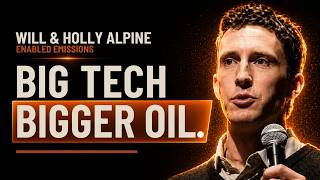
Holly Alpine and Will Alpine

Holly Alpine and Will Alpine founded Enabled Emissions after 14 combined years at Microsoft. They argue the debate over AI and climate leaves out how AI serves oil and gas, and Holly sets out what that has meant in the Permian Basin.

How Does Space-Based Solar Power Work?

Martin Soltau

Martin Soltau directed the UK government study into space-based solar power. He explains how Space Solar's Cassiopeia design steers its energy beam through 360 degrees with no moving parts, and why the beam will not cook the fish.

What Is Space-Based Solar Power?

Sanjay Vijendran

Sanjay Vijendran led the European Space Agency's first dedicated research and development programme on space-based solar power. He explains why a solar farm in orbit sees the Sun all the time, and why reusable rockets have reopened an idea that is over 50 years old.