Can Compute Become a Financial Asset?
Kony says GAIB values a GPU by the rental contract behind it as well as by the chip itself. We're buying into whatever cash flow they're generating in the future, not only the asset value itself, because these assets can depreciate.



In this episode · 18 chapters
- What GAIB is
- Why not just buy Nvidia stock?
- How the model speeds things up
- The traditional way to raise capital
- The segment they focus on
- Due diligence
- How a GPU is valued
- Service contracts
- Mark's rant about the culture
- How do I get involved?
- Ten dollars, a hundred, a thousand
- The supply side
- Jevons paradox
- Jobs going away faster
- What Kony is seeing in China
- Pushing back on mundane
- What should humans be?
- If money and time were no barrier
Kony, CEO of GAIB, tokenises GPUs owned by cloud companies so that anyone with $10, $100 or $1,000 can invest in AI infrastructure. He explains why smaller cloud companies struggle to borrow from banks, and how GAIB's due diligence works.
He compares GAIB's AID product to a mutual fund made of GPU deals and argues that more efficient models such as DeepSeek pushed demand for compute up. Near the end, Kony describes robots cleaning roads in multiple cities in China.
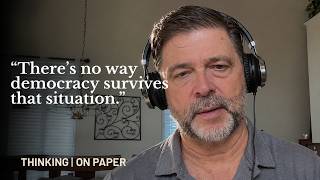
Kony, CEO of GAIB, explains on the Thinking On Paper podcast how GAIB finances cloud companies' GPUs and turns them into tokenised assets, making AI compute something anyone can invest in. He says GAIB values a GPU by the cash flow its rental contracts will generate, “not only the asset value itself, because these assets can depreciate”.
Can compute become a financial asset?
Kony says it can. GAIB finances cloud companies' GPUs and turns them into tokenised assets, valuing each GPU by the cash flow its rental contracts will generate.
What does the name GAIB stand for?
GAIB takes its name from Dune and stands for GPU, AI and blockchain or bond. Kony says it targets two problems: crypto's lack of real yield, meaning income from real economic activity rather than new token emissions, and the fact that buying Nvidia stock is the main way most people can invest in AI infrastructure.
Why do smaller cloud companies struggle to borrow money?
Kony says smaller cloud companies worth a few hundred million to a few billion dollars struggle to borrow, because banks have been risk averse since the 2008 financial crisis and do not yet understand GPUs as an asset class. GAIB aims to set the standard for how these assets are priced, structured and tokenised, which means turned into blockchain tokens that can be bought in small pieces.
How does GAIB value a GPU?
To value a GPU, GAIB checks the chip type, how long it has been used, its rental rate and how long the contract runs, then discounts the expected income to a present value. Kony prefers reserved contracts, where a client pays for capacity for a fixed term whether it uses it or not, because the cash flow is more predictable than on-demand rental.
What is GAIB's AID product?
GAIB's AID is a synthetic asset that Kony compares to a mutual fund: a basket of tokenised GPU deals across cloud companies in several countries, paying a blended yield. He says investors can put in “$10, $100, $1,000, even $1,000,000” and GAIB treats them all the same.
Did DeepSeek R1 raise or cut demand for compute?
Kony says GAIB works with more than 10 cloud companies worldwide and has over $2 billion of GPUs in its pipeline to tokenise over the next one to two years. He argues that the release of DeepSeek R1 raised demand for compute rather than cutting it, using the steam-engine example that Jeremy labels the Jevons paradox: greater efficiency increases total use.
Where Mark and Kony disagree
When Kony says AI will take over mundane work, Mark objects that a huge share of the world's population depends on mundane jobs to put food on the table. Kony replies that mundane means repetitive, not boring, and that people will need to upskill and retrain.
Links from this episode
Questions
Can compute become a financial asset?
Kony says it can. GAIB finances cloud companies' GPUs and turns them into tokenised assets, valuing each GPU by the cash flow its rental contracts will generate.
Who is Kony?
Kony, CEO of GAIB, tokenises GPUs owned by cloud companies so that anyone with $10, $100 or $1,000 can invest in AI infrastructure.
What does GAIB do?
Kony, CEO of GAIB, explains on the Thinking On Paper podcast how GAIB finances cloud companies' GPUs and turns them into tokenised assets, making AI compute something anyone can invest in.
Can ordinary people invest in AI infrastructure through GAIB?
Kony, CEO of GAIB, tokenises GPUs owned by cloud companies so that anyone with $10, $100 or $1,000 can invest in AI infrastructure. He says investors can put in “$10, $100, $1,000, even $1,000,000” and GAIB treats them all the same.
Transcript
Jeremy Gilbertson Disruptors and curious minds. Welcome to another episode of thinking on paper. My name is Jeremy. This is Mark. We explore technology, the future, what it means to culture, to life, to us as humans, what's going on in the soft matter of our brains. We unpack it here. We've got a great discussion today. Guess what guys? Compute. Let's talk about compute, right? I come out of the data center world and you know, compute is very valuable. What we're going to be talking about today, tying this into all the news
Jeremy Gilbertson about stable coins, hearing stable coins, stable coins, stable coin right now. This is a real world asset tied to a means to use it as an investment vehicle. We're gonna talk about compute and compute potentially being a new currency, a new valuable thing for people to invest in and out of because it's gonna be what powers this AI revolution, right, Mark? What are you thinking? What are you excited about today? How are we teeing the show up for our listeners?
Mark Fielding I'm interested in getting my piece of the AI pie. fact, so today on the news that on the back of the news that Meta have invested 15 billion in a $15 billion in a 49 % stake in scale AI. I was just reading before between 2013 and 2023. So that's out of date information. US and EU AI companies received over $560 billion in funding. We're talking trillion dollar investment by 2030 and
I want to be able to invest in AI. I don't have a hundred million dollars to invest in a company. I'm not a VC. I don't have access to these funds. And today's guest, Kony CEO of GAIB is running a platform that's going to give you and me the opportunity to invest in the AI infrastructure, which as we all know by now is going to be the infrastructure of the future. So I'm learning how to do it. I want to know how to do it. I've got my crypto ready, I've got my dollars ready, I'm ready to learn and invest. Not financial advice, by the way, listener. I should have.
Jeremy Gilbertson All right, Kony, thanks for joining us.
Kony Hey, Mark. Hey Jeremy. Yeah, my pleasure.
Mark Fielding Welcome to the show. Thank you for thinking on paper with us. Yes, GAIB AI infrastructure, investment, cryptocurrency, blockchain. You're connecting the dots. You're doing what thinking on paper does and connecting all those dots for people who are new to this idea. Could you just before we get into the details, paint us a big 5,000 foot plan view of what GAIB is?
What GAIB is
Kony Sure. Yeah. I would like to start with our name, GAIB, right? It obviously draws inspiration from DUNE the movie, from Lisa and Al GAIB, where it means the future that unseen. And actually GAIB is an acronym for three key pillars that we focus on, GPU, AI, and blockchain or bond, which is the financial perspective of the whole thing that we piece them together. So what GAIB is trying to do is, number one, we are financializing and tokenizing these infrastructure assets.
for crypto and AI, which is GPU, to make it into a U-Bank asset on-chain. And on top of that, we build a whole DeFi ecosystems and LEGO and puzzles to make the AI economy to thrive. That's what we do. And what problem do we solve here? Well, there's several problems. One, we want to bring actual AI yield into the market, especially the crypto market. Because we all know, like, in crypto, a lot of the DeFi protocols are just outborrowed. Like, you have the...
rely on token emission to incentivise people to do a lot of things. There's no actual real yield in the market. And the second thing is, what we want to solve is to create new markets and new assets for people to invest into AI. Because right now, for anybody to invest into AI infrastructure, the only in direct that way is for you to buy Nvidia stock Done. Nothing else. But what if now today we can actually invest directly into the AI infrastructure assets that power the whole whatever ChatGPT you're using?
the Microsoft AI you're using, that would be great, right? So you're actually getting into the most important asset that everybody is relying on, which is compute. So these are the two problems that we want to solve and provide solution to, especially as the name we tell, GPU AI and blockchain, that ties them altogether by leveraging crypto and blockchain technologies here.
Mark Fielding It's a big vision, Jeremy.
Why not just buy Nvidia stock?
Jeremy Gilbertson So yeah, a hundred percent. So, so I, in my research, I look at three kind of, kind of blocks for you guys. One is this, this cloud data center provider, right? The people that are actually building these facilities that use the GPUs that allow people to train models, build apps, run apps, all of that stuff. You have investors, like you mentioned is right now the only way to really invest in AI is to buy Nvidia stock or buy some other.
some other stock like that, right? And then you have this AI economy and what the effect is on the AI economy. So my question is, so I come from the data center space, you know, I help people build data centers. I help people consolidate data centers that I did that for a long, time. And I worked with VC firms to do due diligence audits on portfolios that they were buying. So my first question is, do you guys have anyone on your team that has done data center, traditional data center financing in the past, because you seem very, fluent in that language. Can you tell me about that?
Kony Yeah, sure. Like myself, I come from a social finance background. I used to do investment banking focusing on credit research, equity research, and private equity. So the whole structuring, financing, very familiar with that. And also during my study, I'm from the University of Hong Kong, doing finance and international business, and then also PhD Java. So I have like this kind of area of expertise.
And then the other hand is my co founder Alex. He also runs a cloud company himself these days and his family runs a semiconductor business. So we have the first line of information whenever you want in order to do the cross-check, do due diligence on the other cloud companies and their customers or the assets they claim to. And even we can have a direct channel with all the OEMs and ODMs of NVIDIA so that we can do some cross-check and reference check there.
And then the third is for the growth lead on Web2Cloud company sites. Our team leader, the growth lead there, he used to work at Bitdeer, which is a Bitcoin miner and at the corporate strategy and development team where he was the one helping to do like strategy M&A on three things: GPU farms, mining farms, and AI companies. So he did like, he also did like a successful merger for Bitdeer to invest into other GPU farms and cloud companies.
So the team-wise, we have a group of professionals from the backgrounds across finance, AI, and also mining and the crypto side, of course. So that's like, we share the blood, we share the DNA from that angle.
How the model speeds things up
Jeremy Gilbertson Very cool. let's, let's stay focused on the, the, you know, why GAIB matters to this, this cloud data center provider bucket. And then Mark, I know you want to go into like the, how you as an individual can, can invest in this kind of stuff. you know, true where this is, where this is headed everybody by, by 2030, there's a McKinsey study that, the data center funding requirements for compute for network storage, all of that stuff will be above $7 trillion. There's going to, we're going to need $7 trillion to power what's going to happen in 2030. So we got to do things a little differently, which is really why GAIB is very interesting. So when you invest in a data center, when not as an individual, but as an investment firm, you invest in building a data center, it takes a little while for returns to come, right? Cause you're the revenue that data center has is either with what's called wholesale leasing, whether you get a big chunk of space or services out of that or individual retail type type arrangements.
But how does your model, Kony, speed up this return on investment for people on the data center side?
Kony Yep. We don't speed up on the ROI for the investment side, but what we do is actually help them to get capital for whatever the expansion. So that's what we do. And then for data, so we work with two types of companies. One is data centres the other is cloud company. So data centres is the one who rent to lease the show space to all these cloud companies who want to put the GPUs in. And the other one is the cloud company who's actually buying hosting and putting the GPUs into the data centers. So our key focus, two of the both of them can be our customer because sometimes data centers will vertically to integrate to provide cloud services as well. But the other times like it will be mainly the cloud companies to actually renting these like a space from the data centers to provide a cloud come to provide a cloud services. So what GAIB is working
Jeremy Gilbertson Kony me, just let me jump in real quick just for clarity purposes. So difference between data center company and cloud company, data center company provides this controlled power and cooling space for people to rent and put their equipment in. What cloud companies do is they actually put the equipment into that space and they lease services out of that. So it's a little bit different. I just wanted to clarify that.
Kony Correct, correct, correct. Yeah. Yeah, correct. Yeah. Very cool. Very cool. Yeah. So, yeah. So we, we, we work with both because sometimes they do vertically expand and they can even build their own data centers. So that's why we can work with both. And what GAIB is helping and working with these two types of companies is that we provide a solution for them to get capital. Right. You as a cloud, you as a cloud company, now you want to expand, need to get capital to buy these machines and put it into the data centers and host it up and get to get clients back.
The traditional way to raise capital
Kony So the usual traditional way for you to get capital, there are many three ways. One is either you having money on your balance sheet or profit. The second way is to go to VCs to say, hey, I want to raise some money through equity financing, can you invest into us? And the third way is through private lending, going to family offices, private credit firms, banks, and other traditional institutions to get money. But most of the cloud companies these days can only have access to the first two routes. They can't really do private lending or private borrowing.
in this case, because number one, traditional institutions are pretty risk averse after the 2008 financial crisis. The second thing is, if they were to do this, they still find it hard to understand GPU as an asset class, because it's novel. It's not so common that, okay, they understand the whole GPU economics, the cloud company economics, so it might take some time for them to do it. And the third is, there's no standard for you on how do you appraise the asset, how do you understand the company's schedule.
So what we want to do is we, GAIB, as a platform, we want to set a standard. How do we price these assets? How do we structure these assets? How do we tokenize these assets? And secondly is because we have the know-how. We are inside the cloud company space. So we understand the cloud company economics. That's why we can easily be the one to underwrite and package these deals together for our investors, for our buyers, users on the platform. And the third way is, when we actually do this process, because we know the space, it's way...
faster than the other traditional players in the market. And let alone, there are not many traditional players. Even if you look across Web3, Web2, there are very few of them. If you're talking about a billion, $2 billion company, or even a $10, $20 billion company like CoreWeave they could have whatever capital market means they want. They can go to the bank and say, hey, this is my stock, this is my client, and get money. But those smaller cloud companies, which are a few hundred million, a few billion dollars, they might find it hard to get capital.
Kony they could have whatever capital market means they want. can go to bank and say hey, this is my stock, this is my client and get money. Of those smaller cloud companies which are a few hundred million, a few billion dollars, they might find it hard to get capital. And this is exactly the same as the companies we want to focus on, which are number one exponentially growing. Second thing is, don't have, there is this gap missing for them.
The segment they focus on
Kony And this is exactly the segment of companies that we want to focus on, which are number one, exponentially growing. Second thing is there is this gap missing for them to get capital there. And what we're seeing in terms of the trend of the global expansion for these cloud company sectors is that there'll be more and more regional and localized cloud companies being spun up to meet the local demands and regional demand. Back in the days for cloud, when we talk about cloud, we all would come to our mind as a public cloud.
AWS, GCP, SOR. But if we're talking about AI cloud, these traditional top public cloud may not meet the needs. That's why we need more, like more, new type of regional cloud that's coming up. And it's taking over the space. As you mentioned, we need $7 trillion of capital to invest in the whole tech stack of the AI supply chain. This is exactly where we want to become a funding channel to make that happen. And along the way, anybody can invest. It's not only those rich,
Institutions can do it. I want everybody want to get a bite of the growth of AI Can actually invest through the asset class that you know, the most important asset class which is GPU and compute there. So yeah That's what we want to
Jeremy Gilbertson Well, this is yeah, this is really interesting to yeah and to kind of break it down a little bit further what what what Kony was talking about between Like these large instead of building these, you conglomerate and the large facilities will be out there these these these
Jeremy Gilbertson cities, right? They're cities of like compute infrastructure. The reason why you have to have localized version of those is basically it's a network limitation, right? Kony, so if you're trying to pull a whole bunch of data from one site that's like thousand miles away versus getting that distributed to somewhere five miles away, we're going to be able to do a lot more with the data. So you got to, that's the reason why that's a great argument for why this small to midsize folks are going to be really important, which bodes well for what you're doing at GAIB
Kony Correct, correct, yeah, perfect, yeah.
Mark Fielding I love Jeremy such an expert. I'm going to say much in this show. I can feel it. Just want to, you mentioned the speed of the investment and I imagine depending on how good the idea is going to VCs, go to private investment, pitching, pitching, pitching, pitching and pitching again, very time consuming. You mentioned speed. Nothing moves quicker than AI. Okay. A small to mid-level AI company comes to you. What's the turnaround? How quickly could they be financed once you decide that they are?
Due diligence
Kony Yeah, we usually have a process of like pre-lim deep due diligence and also a thorough one. Pre-lim one, we can finish that within a week. So if you fill in a questionnaire, we understand what is the capital you need, how much you need, how long you need, and then what GPUs do you have, and who is your client is the basic information. And after that, if we see, we have a few criteria. One is we want to work with company that has existing asset, GPUs there. We want to work with company that has some good traction because
At end of the day, the kind of party, the risk is the key risk there. So we have to know who the money that we're giving to and what is their background. And after the pre-lim DD is done, then we'll enter into a more thorough due diligent process, which we need to take in the third party auditor, the big four, the accounting firms, to understand the capital structure, financials, the client, the payment history, the asset appraised, how much they're worth, et cetera. So that one.
Kony depending on how cooperative the company is, it could be pretty short period of time, like within a month or two, or it can be long if they're not cooperative. So it all boils down to how both sides want to move things faster. And because we have a pretty standard framework internally in terms of how we underwrite the risk, how we analyze the risk, how we structure the cash flow and the product. So it's just like plug and play. When every materials field box is being checked, then we're good to go.
Kony It can be really short of the time, like a month or two. It can be long if they're not covered properly. So, you know, what I said, how both sides want to move things faster. because we have a pretty extended work internally in terms of how we underwrite the race, how we analyze the race, how we structure the casual and the product. it's just like plug and play. When the materials field, checkboxes being checked, then we're to go. So, that's the state that we want to set to the
Kony So that's the stand that we want to set to the market as well. Because ultimately, there will be more people doing this. I have no doubts. What we want to do is we want to become a platform where we can onboard other people who can bring in these cloud companies, data centers, or even capital on our platform as someone bringing the deal. Like if you look at LIDO LIDO has a few operators. They get ETH operating a node and then to get network running.
Kony Ultimately, we don't... There will be more people doing this.
Kony on our platform, we want to be the same. So we are the initial operator. We want to have other operators bringing more views, bringing more assets and connections to the platform to tokenize these assets for people investing too. So that needs to be a standard. Otherwise, it cannot scale. So this is exactly the foundation that we lay in here.
Jeremy Gilbertson So let's let's so real quick disruptors and curious minds don't come to Kony with an idea of I want to build a GPU farm You have to have GPUs work and you have to ideally have some transactions on these on these things
Which which makes sense. That's my that was my initial question, right? So the you answer very well, so let's talk about how you value because it one of your core core competencies I think you mentioned in a few minutes ago was the ability to evaluate this type of asset based on your team based on their experience So if I picture, know, this is like the gold rush, right? Where I bring my pile of gold to your desk and you start biting it to see if it's real gold, right? Talk me through how you evaluate a GPU and give it value or don't give it value?
How a GPU is valued
Kony Sure, sure, sure. So GPU as any other asset, they have an asset value attached to it. And the reason why we usually mention what we do is not only tokenization, but also financialization is that we have to understand these assets value and the futures value because we want to buy something. We're buying into whatever cash flow they're generating in the future, not only the asset value itself, because these assets can depreciate. If you look at any asset, it means like there always will be depreciation in terms of residual value there, whether it's house, a car, or even GPU that we're talking about. So we have to not only look at the depreciation as a non-cash cost, but also look at the future cash flow. So what we do is you come to us with a GPU. Number one, we have to know what type of GPU they are, and then how long they have been being used for. The third is how much they've been being sold out to, for example, what is the rate that you're renting it out for.
And the third is how long that rental contract or even your client contract actually lasts for. So that we can determine, let's say in the next year, we're going to give you money or we want to invest into the asset here for the next three years. How much can I get back? And if I say, if we say, okay, we can get back a hundred dollars, then we can discount it back to the actual present value of how much these assets are being worth off. It's just very simple. We have done the same asset value appraisal for any asset class out there.
aircraft, cars, houses, even other equipment. So we can apply the same principle on GPU assets.
Service contracts
Jeremy Gilbertson How did GPU service contracts come into the valuation of them?
Kony Yep, GPU service contract actually is a revenue part. So if you look at an asset, there has to be a few parts. One is on the revenue, the other side is cost. So these GPU service contract, they are the revenue part where they drive the return of these asset value. So there are usually two models of how these GPUs being used for. One is called resurfed model, meaning, hey, I ran your GPU for three years.
Whether I use it or not, I still have to pay you. Whether I use it 80%, 90%, 100 % capacity, I still pay you how much that I promised for. And then the second way is more on-demand, which is you're using, for example, you're using AWS. Most of time you're using on-demand, meaning it's a pay as you use model, how much you use, how much you pay. That is more short-term. You may or may not even have the contract for it. So this is usually the higher price.
What we prefer is you have a long-term contract so that cash flow is more predictable even to a certain level. And on the other hand, on the other hand of the calculation on formula is the cost. So we have to understand like what is the cost to the GPU. For example, the majority of the cost will be like data center cost. Like if want to host it, service it, what is the per hour cost to the GPU card there. So by understanding the cost driver, the revenue driver, then we know how much these assets are worth today, even for the next year, for the next two years, next three years, so on and so forth.
Jeremy Gilbertson So more tangible question of that. Let's say we've got an Nvidia H100, 30 grand each ish, right? Give or take. say I have an H200 that is the revenue that the services off of that have paid it off up to about 70%. So like there's 30 % yet to be paid back on the cost. And then Mark has one that has about 80 % left.
Jeremy Gilbertson to pay back the cost of it. Mine is more valuable than his, right?
Kony Correct, correct, yeah, yeah, yeah. Definitely, yeah.
Jeremy Gilbertson Got it. Okay. Let's, let's switch gears a little bit. Let's switch gears going, going onto this individual investment ability. Right? So you have what, if Mark's coming in and he, you know, he can't buy a thousand shares of Nvidia stock, but he wants to get into this in this game, he's not going to finance a $20 million data center build. Right? So here's a, here's a way he can get into it and do it is what we're looking at. And I'm just trying to break this down. This might be ridiculously stupid, but is, is this vehicle kind of like a kind of like a mutual fund for cash flows of GPUs. Is that ish?
Kony That could be a good analogy. So what we introduce in the market right now is called AID, which is a synthetic asset. It functions as a portfolio, essentially a basket of all the tokenized GPU deals. So similar to mutual fund, have different assets underneath that, according to the mix of the portfolio. It's the same thing here for the AID. We have different types of tokenized GPU assets there. For example, maybe 10 % go for a company, Cloud Company 1, 20 % Cloud Company 2, 30 % Cloud Company 3, and part that will be left for liquidity on the TPU side. So that functions as a portfolio. essentially what you get is a blended yield of underlying GPU asset there. And also you're pretty diversified. You're not like, okay, just being attached to one deal there. Yeah, you're diversified to a portfolio of deals and the risk is sort of like diversified as well because the cloud companies they're working with right now, they're global. So you can get access to not only US-based cloud companies' data centres but you can get access to the outside of US, where you can give you sort of a checking balance in case of geographical, political tensions there, if there's any case, just like a diversified portfolio.
Mark's rant about the culture
Mark Fielding I'm going to say, this is my place to come in. The culture, the crypto Twitter culture of GAIB I really watching and learning about GAIB the last few weeks, you have a very passionate crypto community and thinking on paper, we tie episodes together. Last week we had Robbie Young CEO of Animoca brands on thinking on paper link here. And we were speaking about community. we were speaking about the the crypto philosophy, kind of, what, what the internet was like back at the beginning, what it became, what we're trying, Web3 is trying to take it back towards. And GAIB seems to tick a lot of boxes. So I, for me, the last 20 minutes has been a great learning experience to learn about the actually what GAIB is doing behind the scenes of the crypto, of the crypto Twitter presence, which you have the culture, you have the art, you have this awesome link to Dune which resonates with a lot of people.
And also, as we spoke about in beginning, AI is increasingly what feels like a gated world where me and Jeremy and a lot of the listeners of Thinking On Paper, okay, we click buttons on chat GPT, but we have no access to the underlying structure. And that is a bit like big tech and the social media platforms and you don't own your content and these...
very few companies control everything and GAIB's kind of pushing against that and that way, isn't it? So you've got this ticking a lot of boxes. And so for all the crypto Twitter people who don't necessarily understand the last 20 minutes of GPU, a lot of them do, but I've got a few hundred dollars and I want to invest. Like, and you mentioned AIDA, could you walk it through for a non-GPU, non-data center expert, just an interested part he wants to?
Mark Fielding knock down some of those walls. That was a very long rant almost, sorry. Long question. We'll edit that out.
Kony Yeah, yeah, yeah.
How do I get involved?
Jeremy Gilbertson So another frame up would be how do I get involved as an investor? But I love the ramp up, yeah.
Mark Fielding Those are basically just so I can frame in my head. Yeah.
Kony Thanks for paving the way, Mark. The reason why we're doing the tokenized GPU products, why we're doing the AID products is that no matter how much you want, $10, $100, $1,000, even $1,000,000, we don't differentiate you. You can just buy the portion that you want to the level that you can afford and the risk that you can take. So it's very simple.
If you want to get involved, just go to our website, check out. We're running a pre-deposit campaign. So you can deposit USDT, USDC, on any chains that we supported, which include Ethereum, Arbitrum, Base, SEI, going to a couple other chains more. you just deposit there. And what you're getting is number one, we have some incentive program coming up. We have the underlying GPU there as well. So it's just as simple.
You essentially holding a yield bearing asset as you're buying like a Ethereum token, which is non yield bearing Stake is another story. But yeah, so it says this As simple as that go to the website check it out If you find the youth is good, the risk is good. You want to get involved for AI you'd yeah, just click deposit then it's done and getting back to the I want to add one more thing is exactly what Jeremy was saying like a lot of the big tech companies trying to build their own AI cloud companies, AI data centres these days. And what we want to do is to not only let big guys be the one that benefit from the underlying asset, but also anybody that want to invest in these asset class can do it. So that's exactly why we use token for, because when you tokenize one thing, you can break it down into pieces. You can fragment it to the level where it's affordable on
Ten dollars, a hundred, a thousand
Kony dollars level, $10, $100, $1,000. You don't have to be deep-bought cat with $10 million to play the game. If you have a poker pair, definitely know buy-in. What's the minimum buy-in here? To these big tech guys, their buy-in is 10, 20 million. But what we want is low it down. Buy-in is one, two dollars. You can do it that way. You don't have to, because of your capital, to...
to be blocked out of the game. That's what we don't want. That's why the problem, like as I mentioned earlier on this podcast, the problem that we want to solve is number one, is bringing actual yield to crypto. The second thing is to break down barriers, introducing new markets and new channels for anybody to invest into. So these are the key things, why are we doing here and what crypto is here for, because they allow people to invest and lower down barriers.
The supply side
Jeremy Gilbertson How yeah, no doubt how So I know you're probably on the other side of this Equation you're you're trying to bring in people to the platform to to jump in as investors, but you're also building the portfolio right of You GPU owners and stuff. Tell us about how that side's going and and how soon that that may be ready for primetime
Kony Yeah, that side, the supply side of GPU Cloud companies, we're working with over 10 cloud companies globally right now, including the first NVIDIA cloud partner on the Southern level in Thailand, first one in Taiwan, first one privately held NCP. NCP is a term where NVIDIA use, meaning they give privileges to these cloud companies. They're official batch, like, hey, you are my...
My affiliates is that we want to give you the best access to GPUs, best clients in the region. So we're working with these three in that region. And the other cloud companies that we're working with span across Malaysia, Vietnam, Japan, Singapore, Hong Kong, Asia area. And then US, Canada, going to Mexico and the America side. And then Europe, we're talking to cloud companies in Nordic area, Iceland.
And even on the APEC side, we're also venturing into Australia. So the space has expanded, multi-fold, when we started the project. We came out last year around this time, like June, July, that time. It was kind of still a small, small, small scene where people were, there were more companies coming up, but not exponentially growth yet. But after...
what we have seen since the launch of DeepSeek R1 and V3, the whole market changed. People thought that the demand for compute, the demand for computation asset would drop with the more efficient model comes out. Well, in fact, it is not. If you go to look at CoreWeave, which is one of the up and rising cloud companies against GCP, you see the results for Q1 is amazing. Like they have significant growth in the first quarter.
And there are a lot of other non-listed companies has experienced such growth in just one quarter. And a lot of reason behind is that number one, I always use this analogy The invention of steam engine doesn't really reduce the use of coal, but it actually accelerates that. Meaning the more efficient AI model being used or being generated, they actually can allow
Kony can drive more demand on the compute side because you can do so much more things right now with lower cost with more capabilities. That's exactly what happened after DeepSeek R1 comes out.
Jevons paradox
Jeremy Gilbertson Yeah, less more, less Moore's law, more Jevons paradox, With that, yeah, yeah, yeah.
Kony Yeah, exactly, exactly, exactly. Yeah, good to the point.
Jeremy Gilbertson So quick question. All right, so you've got 10 plus partners that you're in various states of evaluation, onboarding, that sort of thing. Is there a target date that you have set right now that, we'll have this pool of GPUs tokenized and ready for people like Mark to participate in?
Kony Yes, yeah, so the reason we're doing the pre-deposit campaign right now is to prepare for the actual mainnet launch where we have the GPUs to be tokenized. In the pipeline, we have over 2 billion dollars to be tokenized in the next one, two years. Immediately in the next three, four months, a few hundred million is ready to be ready. It's ready that when we actually launch, they will come on board. So this is the timeline I do.
Jeremy Gilbertson Did you say a few hundred million? Just a few hundred million. He said it in passing. Just a few hundred million, right? But yeah, continue.
Mark Fielding Well, the TVLs are already like, if you go, can see the millions that's pouring in.
Kony Yeah, we, yeah, the dollar's coming in and then we are tokenizing it back by batch. So introducing it gradually on the platform. Yeah.
Jeremy Gilbertson This is so I feel like I have my head around this a lot better than when I jumped in to do to do my research. So thank you for helping us, you know, get it, get around this, helping our listeners understand what you guys are doing. I have a hot take question mark that I want to drop into this. It's, it's, it's definitely, definitely tangential, but, all right. So we have, we have the news that the anthropic CEO put out there that basically like, Hey, you know, all this talk that we are hearing right now,
Mark Fielding Shoot man, go for it. You're the expert.
Jobs going away faster
Jeremy Gilbertson The stuff's going to happen quicker. Jobs are going to go away faster. Entry level positions are gone. And then you have the Nvidia CEO kind of clapping back and going, Hey man, you're, totally wrong in this. I completely disagree. but the funny thing that I saw was that the Nvidia CEO or the anthropic uses Amazon chips and not Nvidia chips. Talk to me about this feels very WrestleMania in, a lot of ways. Like how do you feel about that interaction and discussion? Who do you think is right?
on the timing of this real impact on human jobs.
What Kony is seeing in China
Kony This is super hot take. We're definitely seeing a lot of more mundane and autonomous jobs being replaced. For example, those low level summary, content writing, translation to certain level are being replaced there. And then the other way is, I'm not sure where you pay attention, it's very funny. In China, robots are cleaning the road right now.
not the cleaners, not the workers anymore. So like one machine replace like four workers for cleaning the road in China these days. And then like machines, some for gimmick, like bring your coffee, bring, mixing your tea there, like some for gimmick, but some for like actual industrial use these days. So that one is more like.
Mark Fielding Is that across China or just in Shanghai? Is that happening in multiple cities across China?
Kony Well, for the road cleaning, it's happening on multiple cities. And then for the cooking side, it's sporadically across China. mean, even outside China, we're seeing some adoption there. For example, if you go to New York or Los Angeles, you see some machine cafe being spun out, like, okay, there's robots cooking for you there. So we're seeing some adoption in that trend. But whether that's massive, not yet. But on the other hand, the AI...
the AI adoption on the autonomous driving level, RoboTaxi is coming. Tesla is launching RoboTaxi and
Mark Fielding That's Musk's big play, isn't it really? The Robo is cheap, are expensive to build, Robo cabs aren't.
Kony Yeah. Yeah, yeah, yeah.
Jeremy Gilbertson With this all, and it's really interesting, there's some other news that's happening right now, it's pretty timely, like there's new models that actually allow AIs to do what we do, essentially create a model of the world and then test how the AI could react in that model of the world, just like I look around the room and I go to navigate across, I create a model of the room in my head and so this stuff's like.
This stuff's like actually starting to happen. You got this humanoid, the humanoid thing is real. We were, still trying to get a few more guests in that regard, but our research research is hot and heavy and at, know there's a company, is it human that is deploying robots in Spartanburg, South Carolina at the BMW plant. They're doing, doing things that they haven't done before. Amazon's figure. That's what it was. Figure, figure, figure. Yep.
Mark Fielding Are Figure doing that aswell?
Jeremy Gilbertson Yeah. Yeah. And filmmaking, Evo, Flow, the Google stuff, that's getting better and better and better and better, isn't it? And yeah.
Kony Yeah, yeah, the Evo 1 is actually got the Evo model for filmmaking is good. So I mean, for some of these content direction, they're definitely gonna be assertive for I wouldn't say replacing human, but making human smarter in other ways, like leaving the more mundane and more like time consuming tasks to the machine. And then you do more creative stuff there. Even if you're talking about the supply chain. We want jobs to go back to America, right? And but the fact is the labor cost is just too high. Maybe we can get some machine to reduce the cost there and the human can do other things and the whole supply chain. So these, we're seeing disruption and not necessarily negative destruction in the whole different types of work variety there. Yeah, this is a very interesting era that we're living in and I'm on diet and I would love to see more innovations in the whole environment.
Pushing back on mundane
Mark Fielding I want to push back on the mundane because for good or ill, a huge proportion of the planet's population work in mundane, boring jobs. And it puts the money, it puts the food on table for millions, if not billions of people. How do we counterbalance that? We can't all chuck in our mundane jobs and get creative. So how do we, or is that just what I call AI collateral damage? And that's just the cost.
Kony That is a very spicy take because when I mentioned mundane, it doesn't mean it's a boring thing. It just means it's repetitive. For example, you're repeating doing one thing. Maybe machine can do it better on a precise level. That's somehow we need to operate that. But human can still be there, do the checking and do other tasks that would be required. And unfortunately, because of the shift of the cycle,
We would definitely see people need to upscale, people need to be retrained for that specific task that we're doing these days. It happened to other industries, unfortunately. For example, when a lot of these factories moved out of China to the SEA regions, a lot of the people in China lost their job. Their unemployment was real. So they need to be retrained and get back in the market.
This is the whole how systematic is doing. That's why I'm not sure you know, like in Japan, all these banks, they're asking their employees to learn how to use AI. You know, if they don't take the lessons, they don't get a certificate, they would just lose their job. So I think the key point here is AI, can we play some part? But what we can do is to how should we leverage AI to make ourselves better, to make our skills better so that...
we can learn more new tasks that we can spend more time on, more high value at a task that we can do.
Jeremy Gilbertson Kony, you hit a very important note right there. And a lot of previous shows talk about this is you got companies like Shopify and a few other companies doing this AI first mentality where I would ask for head count Shopify is like, prove to me that AI can't do it. Right. And then we had a couple other guests talk about, Hey, you can learn anything right with AI, you know, go figure it out. So you're, you're, you're, you're, moving toward this orchestrator of generalism, right?
as opposed to specialization, which I think is really good. then lastly, friends and neighbors, if you're freaked out about AI, go listen to our episode, unpacking, packing McCormack's most human wins. All we're going to do is move up another level of abstraction. Our old outputs are going to become inputs and everybody's going to be fine.
Mark Fielding And we'll also have invested in GAIB. So we'll have lots of return on our investment. So when we get more creative, we'll have the funds to pay for our creativity as well, Jeremy. Yeah, do not, yeah.
Jeremy Gilbertson Not investment advice.
Kony Not investment advice, not investment advice. Yeah, yeah, yeah.
Jeremy Gilbertson We have, go ahead, Kony.
What should humans be?
Jeremy Gilbertson So we have one very important question that we are now starting to finish these important shows with and was given to us by Kevin Kelly that we had on the show. We talked about a number of different things. Kevin Kelly, founder, managing editor of Wired Magazine's done 90,000 other really cool things. His question to you.
Mark Fielding I think we've got two questions though, haven't we? Because I think we should ask the one from Katia from last week as well. We could do them back to back quickly, because that was an awesome question as well.
Jeremy Gilbertson Ooh, I love it. Okay, two important questions that we're gonna finish with here. Kony number one from Kevin Kelly. What should humans be?
Mark Fielding And how does technology help us get there?
Kony I think humans should be creative because each one of us is a very interesting soul where creativity is something
I don't think machine can replace. Every day we're thinking of new solutions, we're thinking of new ideas that make us improve, make us thrive. we create AI, not AI created us. So I think that trend will continue to be the case if humans maintain our creativity, think of new ways, think of ideas.
drive things forward That's where evolution goes. And the second thing is, I think humans should still be maintaining the feeling, maintaining the emotions, maintaining the touch. Like this is what AI cannot do. We are humans made of flesh and blood, and we do have sympathies that machines may not have, right? Yeah.
Spread love, spread care to the people. that's, I think that's the most important thing that we should be.
Jeremy Gilbertson Mark, before we get on to your, the final, before we get on to final question, I'm gonna hit a soap box just for like 45 seconds. Kony, so Kony, you said something really important that resonated with me. Maintain our creativity, maintain our creativity. Guess what, guys? There was a study in the 70s that tell us we get less creative as we get older to the point of exponential dips in creativity. Let's define creativity as the ability to think divergently.
Mark Fielding I think lovely too.
Mark Fielding Go, get on your soapbox.
Jeremy Gilbertson Instead of focusing in a very linear mode, you're kind of putting things together, being creative, mashing things together. We lose that ability if we choose to not work on it. Find a gym for your divergent thinking. Guess what? Writing does that. Thinking on paper does that. Mark, your next question.
Mark Fielding Well, Kony also said that that would be an awesome Instagram short there, Jeremy, well done. Kony also said that we are organic, we are flesh and blood and that ties in nicely to our book club, Irreducible, where we're talking about consciousness, what it means to be human and whether AI will ever be conscious if it is not organic. there's synthetic humans building robots in petri dishes. Maybe that crosses over and it becomes a reality. Second question, Kony, we're bringing in the big stuff. Last week, our guest asked this question for future guests.
If money and time were no barrier
Mark Fielding If money and time was not a barrier, what technology would you create?
Kony Yeah, I will be creative. Yeah, I'll be creative.
Mark Fielding You can do anything.
Kony I would say a time machine, Money and time is not a problem. I would create a time machine because it can allow us to see things through the way and even travel back and forth. Number one, go back to the past, see, not to change anything though, like go back to the past and see and feel what was done wrong. Learn from that. History, learning history is one way, but going there, like bringing that scene back is another.
another thing. And the other way is going to the future. Because it's only when you go to the future, you look back, you realize some of these like conflicts, some of these wars may not make sense. All right. If you if you look look at these conflicts and wars across the long time horizon, they're just like a tiny dust in the whole universe. Like, why do we harm people? Why do we kill people like
Let's just stop these things. Stop these like, final and X, stop these conflicts, stop these like wars, like just be, we live on the same planet. Right. So, and also when you go to the future, you will see that, human evolution, human and generations reiterate, like hopefully it's one generation better than the others. We have done it in the past, thousands of years. We continue to do so. And.
Yeah, that's what drives us and keeps us moving forward. Like we have a goal, we keep on creating, innovating, and hopefully the society, everybody is living a better life ultimately.
Mark Fielding Wonderful answer. So that's two. Now we have a time machine, Jeremy, to add to our spaceship to explore the stars. It's good question. Looking forward to that.
Jeremy Gilbertson Well, I'm also going to, I'm going to add an empathy module into his time machine so that when people go to the past, they can actually activate empathy and really connect with everything. Kony. This has been a fantastic conversation. Thanks for following all the paths that we went down. And I think this presents a pretty clear picture to our listeners, what you're trying to do. I think it's really innovative. I think it's pretty accessible. So keep us in the loop, give us an update, maybe pop back on and, and chat with us again. Thanks for, thanks for being here, Mark closing thoughts.
Mark Fielding Yeah, gaib.ai to learn more about Kony and gaib. Thinkingonpaper.xyz to learn more about thinking on paper. And thank you for thinking on paper with us, Kony. We'll leave it there. We'll see you next week. Next week, are exploring, we're continuing the AI conversation. So join us then, otherwise be disruptive, stay curious.
Jeremy Gilbertson Thinking on paper.
Kony Thank you all. Yeah.